

The process of selecting the best employment can be overwhelming for many people since there can be a number of various jobs to select from. Gig employment and normal employment can both provide you with a chance to get paid and to gain necessary experience and skills. Still, there is a number of differences between these two types of employment that you should consider when making a choice.
Gig work is becoming more common for those who would like to be in charge of their schedule. You will be able to work on certain projects and tasks without having to follow a fixed work schedule. Some of the most common examples of gigs include freelance writing, delivery, tutoring, and virtual assistance. Gig workers tend to prefer setting their own schedules and tasks. Income level is influenced by the market conditions.
What Are Gig Jobs?
Gig jobs involve short term paid work. Workers complete tasks for different customers. Some gigs happen through online platforms. Others come directly from local clients.
Delivery work is a common example. Freelance writing is another popular option. Online tutoring also fits this model. Pet sitting can work similarly too.
Gig workers usually choose their schedules. They may also choose specific projects. This freedom attracts many new workers. However, income can change frequently.
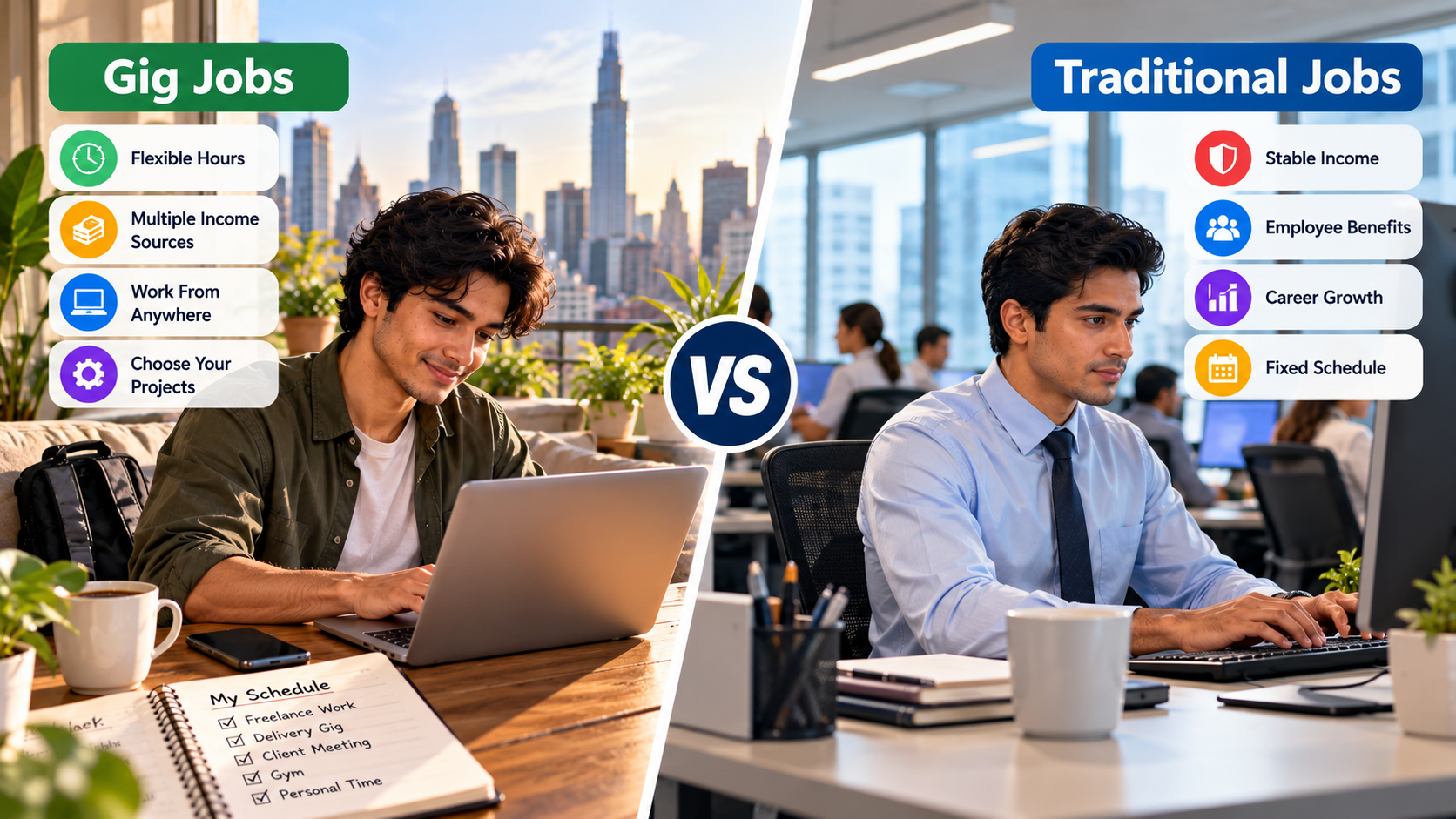
What Are Traditional Jobs?
Traditional jobs follow regular employment structures. Workers usually have fixed work schedules. They often work for one employer. Pay usually arrives on set dates.
Many traditional jobs offer monthly salaries. Others provide hourly wages instead. Workers may receive additional benefits too.
These jobs often provide more stability. However, workers have less schedule control. Employers usually decide working hours.
Quick Comparison
| Feature | Gig Jobs | Traditional Jobs |
|---|---|---|
| Schedule | Usually flexible | Usually fixed |
| Income | Can change | More predictable |
| Work location | Often flexible | Usually assigned |
| Job security | Usually lower | Often higher |
| Benefits | Usually limited | Often available |
| Work choice | More control | Less control |
| Career structure | Less formal | More structured |
| Starting process | Often faster | Often slower |
Flexibility
Flexibility is a major gig advantage. You can often choose working hours. Some platforms allow complete schedule freedom. This works well for busy people.
Students may prefer flexible gig work. Parents may also value flexible schedules. Part time workers can benefit too.
Traditional jobs work very differently. Most employers set fixed schedules. Workers usually follow assigned working hours.
That structure can feel restrictive sometimes. However, it also creates consistency.
Income Stability
Traditional jobs usually offer steadier income. You know your expected payment amount. This makes monthly planning much easier.
Rent becomes easier to manage. Regular bills also become more predictable. Saving can feel more organized too.
Gig income may change each week. Customer demand can fall suddenly. Certain seasons may become slower.
Some weeks may perform very well. Other weeks may feel disappointing.
You should always track gig income. Build savings during stronger periods. This helps during slower weeks.
Income Potential
Gig work can offer strong opportunities. Skilled workers may charge higher rates. More experience can increase earning power.
Freelancers can raise their prices gradually. Task workers may choose better jobs. Delivery workers can target busy periods.
Traditional jobs offer different growth paths. Raises may happen after performance reviews. Promotions can increase your salary.
Both options can grow income. However, the path looks very different.
Work Schedule
Gig workers usually control their schedules. They can work mornings or evenings. Weekend work may also be available.
This freedom sounds very attractive. However, discipline becomes very important.
Without planning, work becomes inconsistent. Income can drop very quickly.
Traditional jobs create automatic structure. You know when work starts. You also know when work ends.
Some people prefer this routine. Others may feel too restricted.
Job Security
Traditional employment may provide stronger security. Workers usually have formal employment agreements.
Some companies also offer notice periods. Others provide severance under certain conditions.
Gig work usually offers less security. Platforms can change rules quickly. Customer demand can also change.
Your account may depend on ratings. Local demand may affect available jobs.
Diversifying can reduce some risk. However, uncertainty still remains.
Employee Benefits
Traditional jobs may include extra benefits. Health coverage may be included sometimes. Paid vacation may also be available.
Some employers offer retirement plans. Sick leave may also be provided.
Gig workers usually manage these independently. You may need separate insurance. Vacation time usually remains unpaid.
This difference can become important. Always consider total compensation carefully.
A salary alone tells little. Benefits also hold real value.
Freedom and Independence
Gig work offers more personal control. You can choose certain work types. You may also reject some jobs.
Freelancers can choose their clients. Delivery workers can choose active hours.
This independence feels rewarding for many. However, freedom requires good self management.
Traditional jobs offer less independence. Managers usually control daily responsibilities. Company policies guide your work.
Some workers prefer clear direction. Others prefer greater personal control.
Work From Home Opportunities
Many gig jobs support remote work. Freelancers can work from home. Tutors can also teach online.
Virtual assistants often work remotely too. Designers may work from anywhere.
Traditional jobs also offer remote roles. However, availability depends on employers.
Some companies require office attendance. Others allow hybrid work schedules.
Remote work exists in both models. Gig work often offers more flexibility.
Skill Development

Gig work can build useful skills. Freelancing improves communication and organization. Delivery work improves time management.
Tutoring can strengthen communication skills. Design work builds creative experience.
Traditional jobs also support skill growth. Employees may receive formal training. Mentors may also provide guidance.
Promotion paths can offer clear development. This helps long term career planning.
Both options can build skills. Your effort still matters greatly.
Career Growth
Traditional jobs usually provide clearer progression. You may start at entry level. Then you can gain promotions.
Job titles often show career progress. Responsibilities also increase over time.
Gig work follows a different path. Growth depends heavily on reputation. Skills can also increase your rates.
You may build your own business. Some freelancers later create agencies.
Career growth exists in both. The structure simply looks different.
Taxes and Records
Gig workers often manage more records. Income tracking becomes very important. Business expenses should also be recorded.
Tax rules depend on location. Workers should follow local requirements.
Traditional workers usually have simpler records. Employers often handle payroll deductions. Tax documents may be provided automatically.
Gig work needs more organization. Keep clean financial records from beginning.
Work Expenses
Gig jobs can create extra costs. Delivery workers may pay fuel costs. Vehicle maintenance can also become expensive.
Freelancers may need paid software. Internet costs also matter sometimes.
Traditional workers can face expenses too. Commuting costs may become significant. Work clothing may also cost money.
Always compare real take home income. Do not focus on gross earnings.
Social Interaction
Traditional workplaces often provide regular interaction. You may work with teammates daily. Managers are usually nearby too.
Some workers enjoy this environment. Teamwork can make work enjoyable.
Gig work can feel more independent. Freelancers may work alone often. Delivery workers may have limited interaction.
This can suit independent personalities. Others may miss workplace connections.
Work Life Balance
Gig work can improve flexibility. You can plan around personal responsibilities.
However, flexible work has risks. Some people work too many hours. Others struggle to stop working.
Traditional jobs have clearer work boundaries. Fixed schedules may support routine.
However, long commutes can hurt balance. Overtime can also become stressful.
Neither option guarantees perfect balance. Good boundaries remain important.
Gig Jobs May Suit You If
Gig work may fit flexible lifestyles. It can suit students very well. It may also suit side earners.
Consider gig work when you value:
Flexible schedules
Different work opportunities
Greater independence
Remote earning options
Shorter work commitments
Multiple income sources
Self directed work
You should also handle uncertainty well. Strong organization helps gig workers succeed.
Traditional Jobs May Suit You If
Traditional work may suit stability seekers. It can support predictable financial planning.
Consider traditional work when you prefer:
- Regular paychecks
- Fixed working hours
- Employee benefits
- Structured career growth
- Clear job responsibilities
- Formal workplace support
- More predictable routines
This model can reduce uncertainty. It may also support long term planning.
Can You Combine Both?
Yes, many people combine both. This can offer useful balance.
You may keep a regular job. Then you can gig after work. Weekend gigs can provide extra income.
Students may combine classes and gigs. Workers may freelance during evenings.
This approach can reduce financial risk. Your regular income provides stability.
However, avoid working too much. Burnout can reduce your performance.
Start with limited gig hours. Increase only when manageable.
Gig Jobs Versus Traditional Jobs
Neither option wins for everyone. Different lifestyles need different work models.
Gig jobs provide more flexibility. Traditional jobs provide more predictability.
Gig work can offer independence. Traditional jobs provide more structure.
The better option depends on you.
Questions to Ask Yourself
Think carefully before choosing work. Your answers can simplify your decision.
Ask yourself these questions:
How much income stability matters?
- Do I need flexible hours?
- Can I manage changing income?
- Do I prefer independent work?
- Do I need employee benefits?
- What career path do I want?
- Can I manage my own schedule?
- Do I enjoy changing work tasks?
Your answers reveal your priorities.
Common Gig Work Mistakes
Gig work can look very simple. Beginners still make common mistakes.
Some accept every available job. This often reduces real profit.
Others ignore work related expenses. Fuel can quickly reduce earnings.
Many workers skip income tracking. This makes planning much harder.
Some depend on one platform. That can increase income risk.
Build good habits from beginning. Track money and time carefully.
Common Traditional Job Problems
Traditional jobs also have disadvantages. Fixed schedules may feel restrictive. Food delivery jobs are a simple way to make extra money.
Commuting can consume valuable time. Workplace stress can become difficult.
Growth can also feel slow. Promotions may depend on openings.
Some workers dislike less independence. Others dislike office politics.
Every work model has tradeoffs.
How to Test Gig Work First

You do not need instant commitment. Start with a small experiment.
Choose one gig type first. Work limited hours each week.
Track earnings for one month. Also track every major expense.
Check your hourly real profit. Notice how the work feels.
Then compare it with alternatives. This makes your decision easier.
How to Choose Better Gig Jobs
Choose work matching your strengths. Do not chase income claims blindly.
Check required skills before joining. Study platform rules carefully.
Consider travel and operating costs. Look at your available schedule.
Test one option before expanding. Keep the work manageable.
Frequently Asked Questions
Are Gig Jobs Better Than Traditional Jobs?
Not always. Both offer different advantages.
Gig jobs provide more flexibility. Traditional jobs provide more stability.
Are Gig Jobs Good for Students?
They can work well for students. Flexible hours can fit classes.
Study time should remain protected. Avoid excessive working hours.
Are Traditional Jobs More Secure?
They often provide more predictability. However, no job is guaranteed.
Security depends on many factors.
Can Gig Workers Earn More?
Some gig workers earn strong incomes. Results depend on skills and demand.
Expenses also affect real profit.
Do Gig Workers Get Benefits?
Benefits are usually more limited. Rules depend on local employment laws.
Always check your local requirements.
Can I Work Both Types?
Yes, combining both is possible. Many people use gigs part time.
Keep your workload realistic.
Which Option Offers More Freedom?
Gig work usually offers more flexibility. You often control your schedule.
Traditional jobs offer more structure instead.
Which Is Better for Careers?
Traditional jobs offer clearer career ladders. Gig work can build valuable skills.
Your long term goals should decide.
Which Is Better for Extra Income?
Gig work can suit extra income. Flexible schedules make this easier.
Choose work matching your available time.
How Should Beginners Decide?
Start by listing your priorities. Compare stability, flexibility, and expenses.
Then test your preferred option.